Physical Therapy for Runners in Carmel, IN: When Should You See a PT?
You don't necessarily have to stop running every time something starts to hurt. But you also shouldn't have to guess whether that pain is something you can safely work through, a sign that your training needs to change, or a problem worth having evaluated.
For runners, the frustrating part is often not the pain itself. It's not knowing what to do next.
Should you take a few days off? Change your training? Keep running? See a doctor? Or talk to a physical therapist?
If you're a runner in Carmel, Indiana, here's what to know about when physical therapy may be worth considering and what an evaluation can actually help with.
When Should a Runner See a Physical Therapist?
There isn't one specific level of pain that means every runner needs physical therapy. What matters is the bigger picture.
An evaluation may be worth considering when pain keeps coming back, doesn't improve as expected, changes how you move or run, or starts interfering with the activities you normally enjoy.
It's also reasonable to seek professional guidance if an injury keeps interrupting your training or you're having trouble returning to the level of activity you were doing before.
You don't necessarily need to wait until the problem becomes severe.
One 2 One Physical Therapy takes a one-on-one approach to evaluating pain, injuries and movement limitations, with treatment built around the individual's goals and needs.
Is Running Pain Always a Sign of an Injury?
Not necessarily. Runners can experience discomfort for many different reasons, and pain alone doesn't tell you exactly what is happening.
Research on running-related injuries shows that they are influenced by multiple factors rather than one simple cause. Training characteristics, health and lifestyle factors, and biomechanical factors can all play a role, although the evidence isn't strong enough to reduce running injuries to one universal formula.
That's one reason avoiding blanket advice such as "just stop running" or "just run through it" can be important.
The right response depends on the individual runner, the symptoms and what is happening with their training and daily activities.
What Are Some Common Problems Runners Deal With?
Running-related problems can affect different parts of the body.
Research has found the knee, lower leg and foot/ankle among the areas commonly affected by running-related injuries. Specific conditions reported in the literature include patellofemoral pain, Achilles tendinopathy, medial tibial stress syndrome, plantar fasciitis and ankle sprains.
That doesn't mean every case of knee pain is the same—or that a particular symptom automatically means you have one of these conditions.
A proper evaluation is more useful than trying to diagnose yourself from a list of symptoms.

Should You Keep Running If Something Hurts?
This is one of the hardest questions for runners. There isn't a universal yes-or-no answer.
Whether someone should continue running, reduce their activity, modify training or temporarily stop depends on what is causing the symptoms and how the person responds to activity.
That's also why training advice should be individualized. A systematic review involving more than 23,000 runners found that the evidence linking specific weekly distance, duration, frequency, intensity or recent changes in those factors to running-related injuries was inconsistent.
In other words, there isn't one mileage rule that works for every runner.
If pain keeps returning or is affecting your ability to run normally, getting it evaluated can help replace guesswork with a clearer plan.
What Happens During Physical Therapy for a Running Problem?
A physical therapy evaluation isn't simply about finding the painful spot.
The goal is to understand the person's symptoms, movement limitations, goals and the activities they want to get back to.
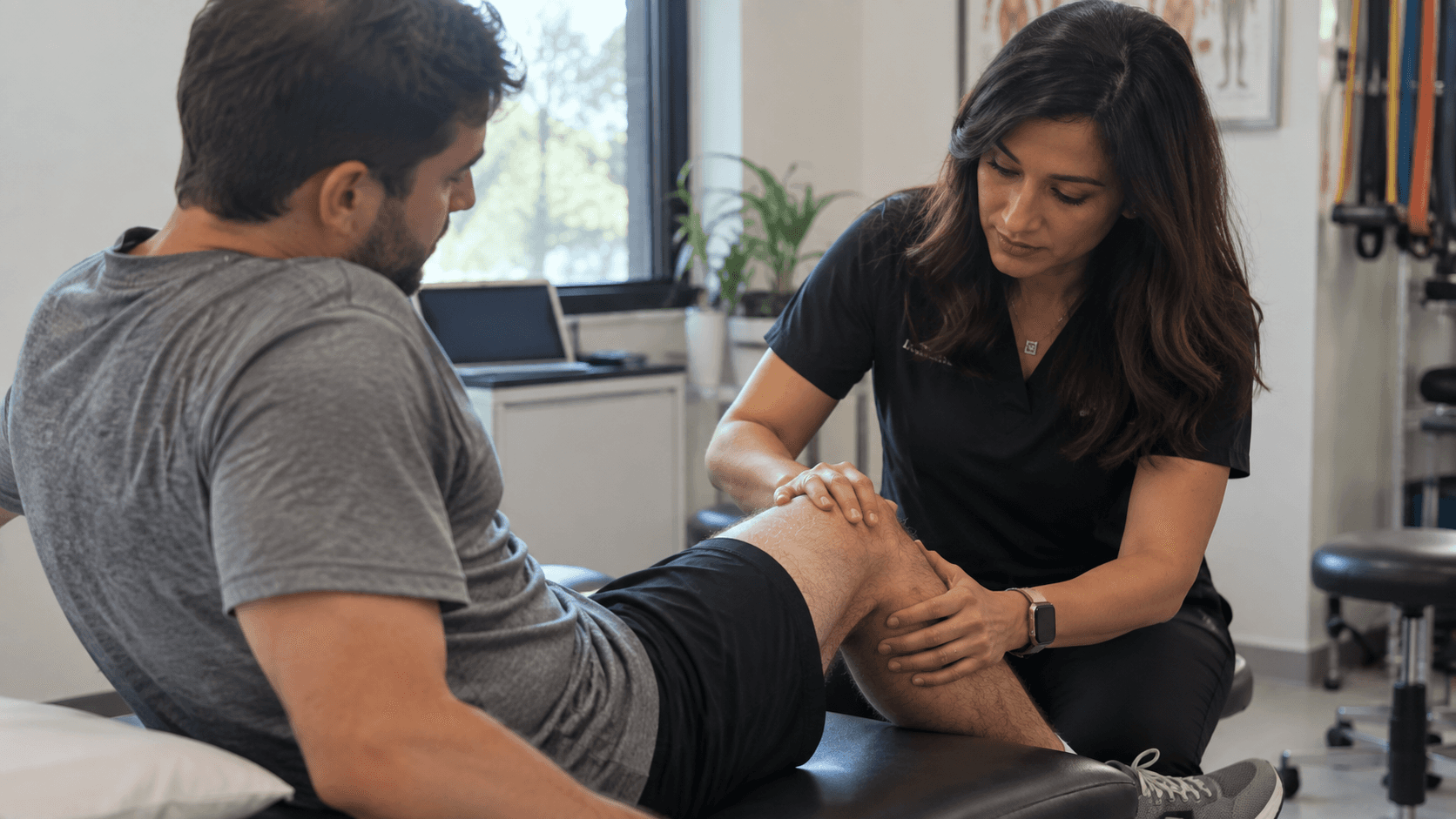
At One 2 One Physical Therapy, the first visit begins with a one-on-one evaluation with Dr. Divya Narayanan, DPT. The clinic says she takes time to understand each patient's concerns, goals and movement challenges before developing a personalized treatment plan.
From there, treatment depends on the individual's situation. That might involve addressing pain, mobility, strength or movement limitations, along with exercises and other physical therapy techniques appropriate to the person's needs.
The important part is that the plan isn't based on a runner's label alone. It should be based on the individual in front of the therapist.
What About Running Form and Gait?
Running form gets a lot of attention online, but it's easy to oversimplify.
There is research investigating the relationship between running biomechanics and injury, but the evidence doesn't support treating one biomechanical measurement as a universal predictor of injury. A systematic review of 82 studies found limited evidence for most biomechanical variables and noted substantial challenges in making definitive conclusions.
So if someone tells you that one part of your running form is automatically the reason you're injured, be cautious.
A runner's history, symptoms, training, physical capacity and individual circumstances all matter.
How Can Physical Therapy Help a Runner Return to Activity?
The goal isn't simply to make the pain disappear for a few days.
For many runners, the bigger goal is getting back to the activities that matter to them.
That might mean returning to regular running, getting back to training after an injury, or simply being able to stay active without constantly worrying about the same problem returning.
Current physical therapy guidance for injured runners emphasizes a runner-centered approach that considers factors such as training history, recovery, nutrition, lifestyle and the runner's goals when making rehabilitation and return-to-sport decisions.
The timeline isn't the same for everyone, which is why we would not recommend promising a fixed number of visits or a guaranteed return-to-running date.

When Should You Get Medical Evaluation Instead?
Physical therapy can be appropriate for many musculoskeletal problems, but not every symptom should simply be treated as a running injury.
If symptoms are severe, unusual, rapidly worsening, or accompanied by other concerning signs, medical evaluation may be appropriate.
A physical therapist can also help determine whether physical therapy is an appropriate next step or whether another type of medical evaluation is needed.
Physical Therapy for Runners in Carmel, Indiana
For runners in Carmel, finding the right care isn't only about finding someone who treats pain.
It's about finding a provider who takes the time to understand what you're trying to get back to.
One 2 One Physical Therapy provides one-on-one physical therapy in Carmel, Indiana, with Dr. Divya Narayanan personally treating patients. The clinic says it works with athletes and active adults dealing with pain, injuries and movement limitations, with care designed around individual goals.
If running is an important part of your life and pain is starting to interfere with it, an evaluation can be a reasonable place to start.